

Five Temple Cities in South India You Need to See (And Why They Matter)
South India’s temple cities aren’t quiet museum pieces behind velvet ropes. They’re living, breathing places where 1,000-year-old architecture meets daily life — where priests conduct rituals at dawn, where pilgrims travel hundreds of miles, and where the stone carvings are so intricate you could spend hours on a single wall.
If you’ve visited Europe’s great cathedrals or explored the ruins of Greece and Rome, South India’s temples will feel both familiar and utterly different. The scale is staggering. The craftsmanship is extraordinary. And unlike so many historical sites, these places are still fully alive.
Each temple city tells a different story. Some are masterpieces of engineering. Others are centres of art and dance. A few are simply so vast and intricate that they defy logic. Together, they represent one of the world’s great architectural traditions — one that most Europeans have never heard of.
At Madurai in Glasgow, we’re named after one of these cities. And if you want to understand South Indian culture — the food, the festivals, the way life is organised — these temple cities are where it all comes together.
Why South India’s Temple Cities Are Different
South Indian temples aren’t like the religious buildings you’re used to in Europe.
They’re not single structures. They’re complexes — sometimes covering dozens of acres — with towering gateways, vast courtyards, covered corridors, ritual pools, and shrines dedicated to different deities. Some have been continuously active for over a thousand years.
The architecture is called Dravidian, and it’s defined by towering gopurams (gateway towers) covered in thousands of painted sculptures. From a distance, they look almost impossibly detailed, like someone carved an entire mythology into stone and then painted it in electric colours.
But here’s what makes them extraordinary for visitors: they’re not frozen in time. Worship happens daily. Festivals draw hundreds of thousands of people. Priests perform rituals that have been passed down for generations. Temple kitchens feed thousands. Musicians and dancers train in classical arts that are older than most European nations.
You’re not observing history. You’re walking through it.
1. Madurai — The Soul of Tamil Nadu
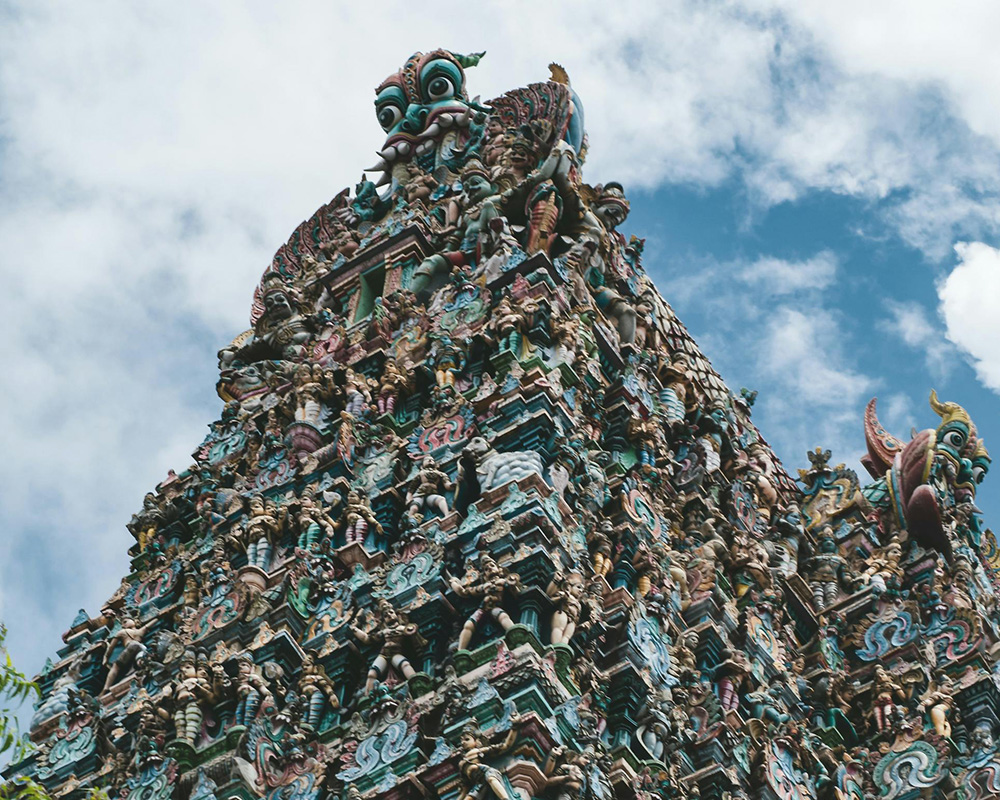
If you only visit one temple city in South India, make it Madurai.
The Meenakshi Amman Temple sits at the heart of the city, and it’s one of the most spectacular religious buildings you’ll ever see. Four towering gopurams rise above the old town, each one covered in thousands of brightly painted sculptures — gods, demons, animals, celestial beings, all stacked in dizzying rows.
Inside, the temple feels endless. Corridors lined with pillars stretch in every direction. The Hall of a Thousand Pillars (actually 985, but who’s counting) is carved with such precision that each pillar is unique. Light filters through stone screens. Incense hangs in the air. Bells ring constantly as worshippers make offerings.
Why it matters: Madurai has been a pilgrimage site for over 2,000 years. The temple isn’t just a landmark — it’s the reason the city exists. Everything radiates out from it. The surrounding streets are filled with flower sellers, food vendors, silk merchants, and goldsmiths. At night, the gopurams are lit up, and the evening ceremony draws thousands of people into the temple’s main hall.
What to see: The evening ceremony (around 9 PM) is unforgettable — drums, chanting, processions, and an atmosphere unlike anything else. Walk the corridors slowly. Look up. The ceiling carvings are just as detailed as the walls.
Getting there: Madurai has an airport with connections to major Indian cities. The temple is in the centre of the old town, walkable from most hotels.
2. Hampi, Karnataka — The Lost Empire
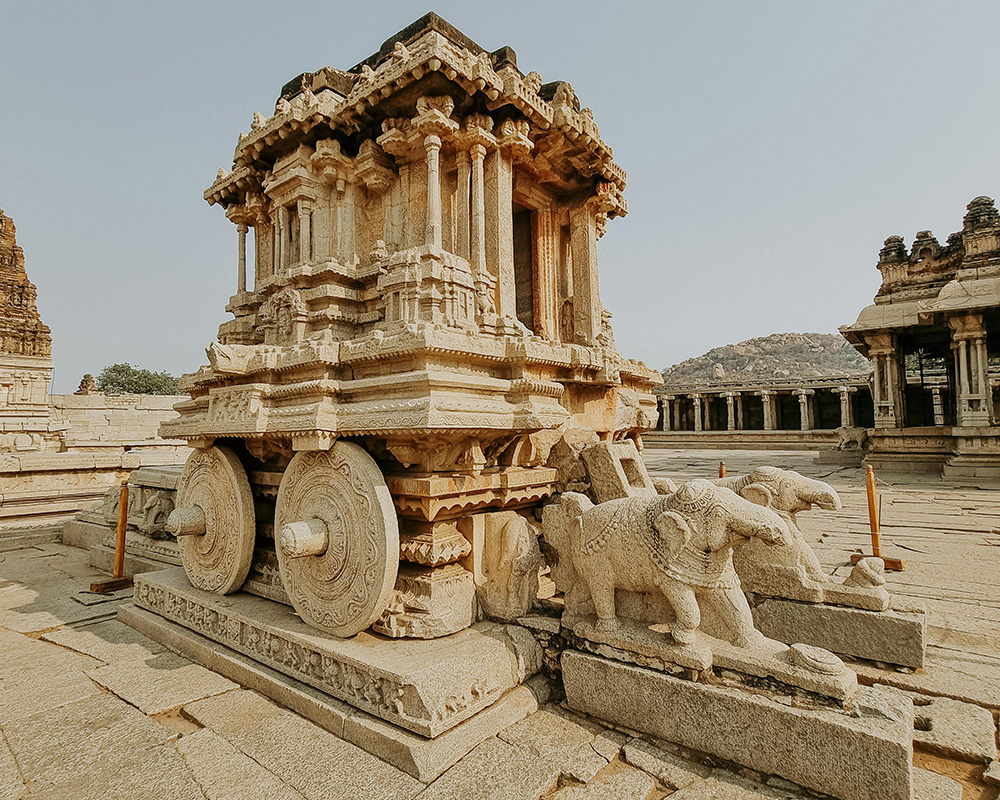
Hampi isn’t just a temple city — it’s the ruins of an entire empire.
Once the capital of the Vijayanagara Empire, Hampi was one of the richest cities in the world in the 14th and 15th centuries. When it fell in 1565, it was left in ruins. Today, it’s a UNESCO World Heritage Site, with temples, palaces, marketplaces, and monuments scattered across a surreal landscape of giant boulders and banana plantations.
The Virupaksha Temple is the centrepiece. Dedicated to Lord Shiva, it’s been in continuous use since the 7th century. The gopuram rises 50 metres, and inside, the temple is carved with scenes from Hindu mythology. But the real magic of Hampi is wandering through the ruins — climbing boulders for views, exploring abandoned structures, and feeling the weight of a lost civilisation.
Why it matters: Hampi shows what South Indian architecture was capable of at its peak. The scale is staggering. The engineering is sophisticated. And the setting — those massive boulders, the Tungabhadra River, the open sky — is unlike anywhere else in India.
What to see: The Virupaksha Temple, the stone chariot at Vittala Temple, the Lotus Mahal, and the sunset view from Matanga Hill. Rent a bike and explore — Hampi is spread out over 26 square kilometres.
Getting there: Hampi is about 350 km from Bangalore. The nearest town is Hospet, which has a train station. From there, it’s a short bus or auto-rickshaw ride to Hampi.
3. Tirupati, Andhra Pradesh — The Richest Temple in the World
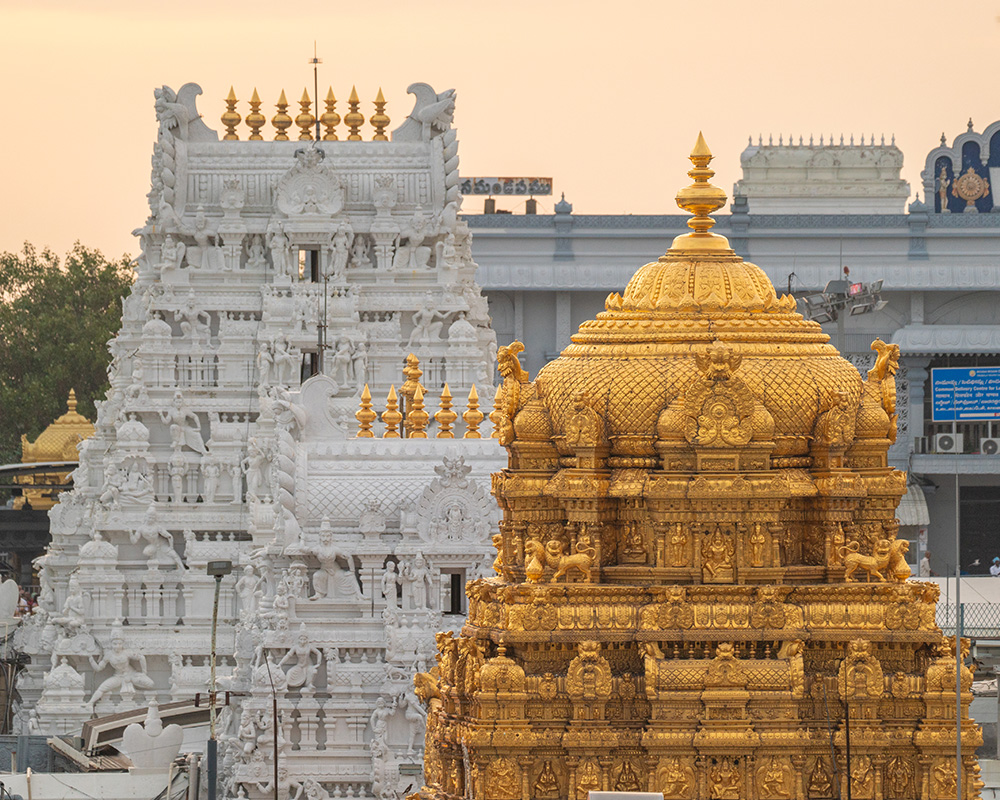
Tirupati is one of the most visited pilgrimage sites in the world — more visitors annually than the Vatican or Mecca.
The Venkateswara Temple sits on top of Tirumala Hill, dedicated to Lord Vishnu. It’s also one of the wealthiest religious institutions on the planet, receiving millions in donations every year. The temple is covered in gold, and the atmosphere is intense — chanting, bells, incense, and crowds that stretch for hours.
What makes Tirupati remarkable isn’t just the temple itself, but the sheer scale of devotion. Pilgrims shave their heads as an offering. They queue for hours — sometimes days — to get a few seconds in front of the deity. The energy is overwhelming.
Why it matters: Tirupati represents the living heart of South Indian Hinduism. It’s not a tourist site. It’s a functioning pilgrimage centre where millions of people come every year to offer prayers, make vows, and seek blessings. The temple has been in continuous worship for over 1,500 years.
What to see: The main temple (expect crowds and long queues). The surrounding hills are beautiful, and there are smaller, quieter temples around the complex. Go early in the morning to avoid the worst of the crowds.
Getting there: Tirupati has an airport with connections to major Indian cities. It’s also well-connected by train and road. The temple is on Tirumala Hill, about 20 km from Tirupati town — buses and taxis run regularly.
4. Guruvayur, Kerala — The Temple of Krishna
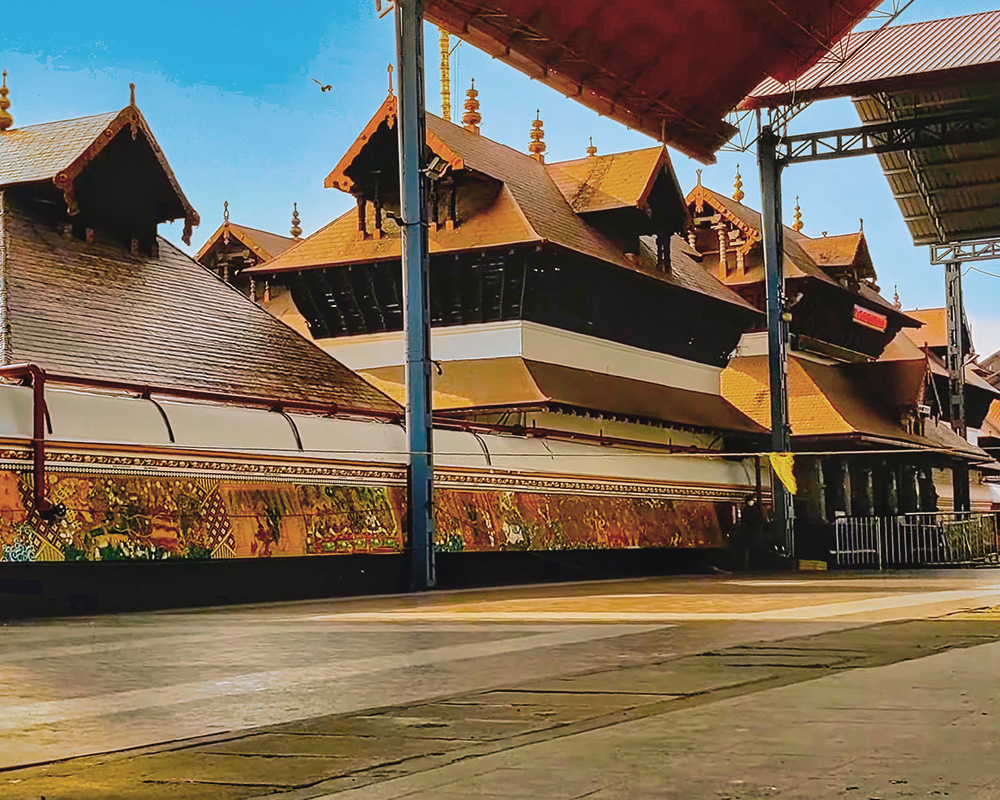
Guruvayur is one of Kerala’s most important pilgrimage sites, dedicated to Lord Krishna.
Unlike the towering gopurams of Tamil Nadu or the ruins of Karnataka, Guruvayur follows Kerala’s temple architecture — sloping tiled roofs, wooden construction, and an inward-facing design that feels intimate rather than monumental. The main deity is a four-armed statue of Krishna, believed to be over 5,000 years old.
The temple is famous for its strict traditions. Non-Hindus are not allowed inside, and even Hindu visitors must follow a dress code. But the town around the temple is fascinating — elephant sanctuaries (elephants are central to Kerala temple culture), traditional art performances, and street food that’s deeply rooted in temple cuisine.
Why it matters: Guruvayur shows a completely different side of South Indian temple culture. Where Tamil Nadu temples are grand and outward-facing, Kerala temples are quieter, more contemplative, and deeply tied to the local landscape. The architecture is designed for the monsoon climate — wood instead of stone, sloped roofs to shed rain, courtyards that capture light without overheating.
What to see: The temple itself (if you’re Hindu). The Punnathurkotta Elephant Sanctuary, where temple elephants are cared for. And the surrounding town, which is filled with traditional Kerala houses, markets, and food stalls.
Getting there: Guruvayur is about 30 km from Thrissur, which has a train station. The nearest airport is Cochin International Airport, about 80 km away.
5. Mahabalipuram, Tamil Nadu — The Shore Temple
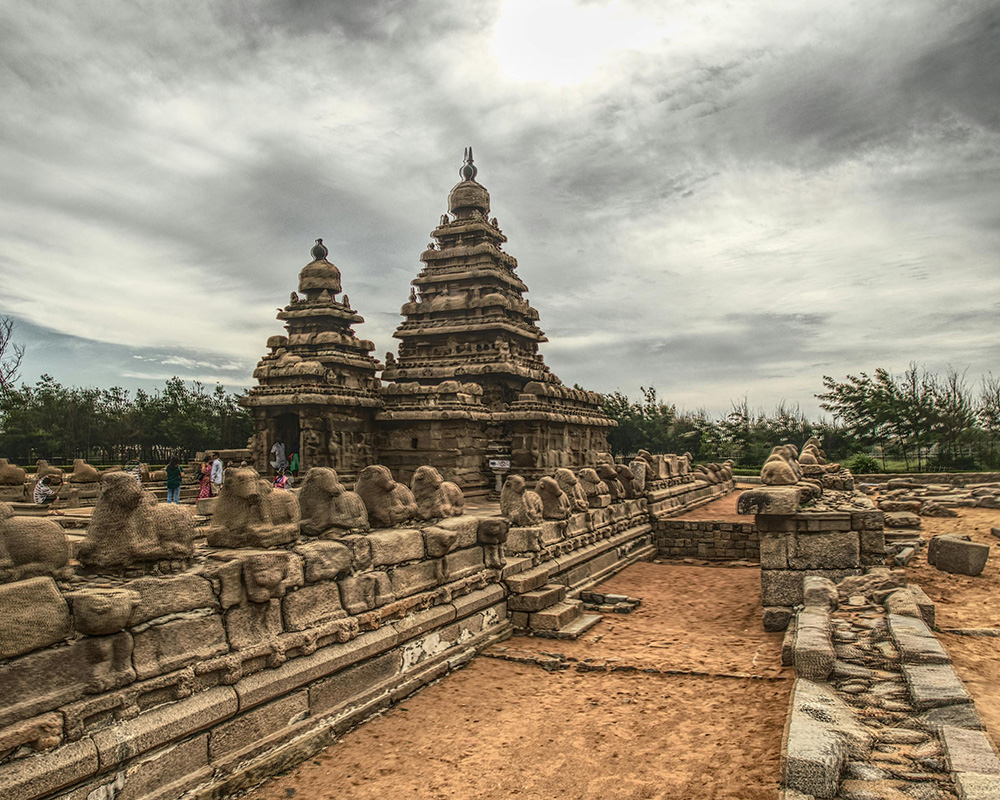
Mahabalipuram is where South Indian temple architecture meets the sea.
The Shore Temple, built in the 8th century, sits right on the edge of the Bay of Bengal. It’s one of the oldest structural stone temples in South India, and it’s survived centuries of sea winds, salt air, and cyclones. The twin shrines are dedicated to Shiva and Vishnu, and the carvings — though weathered — are still breathtaking.
But Mahabalipuram is more than just the Shore Temple. The town is filled with rock-cut temples, cave sanctuaries, and the famous Pancha Rathas — five monolithic temples carved from single boulders. The whole town is a UNESCO World Heritage Site, and it’s a living testament to the Pallava dynasty’s architectural genius.
Why it matters: Mahabalipuram is where South Indian temple architecture was born. The Pallavas were experimenting here in the 7th and 8th centuries, moving from rock-cut caves to free-standing stone structures. You can see the evolution happening across the town — early cave temples, experimental monoliths, and finally the Shore Temple, which became the template for Dravidian architecture across South India.
What to see: The Shore Temple (especially at sunrise or sunset when the light is extraordinary). The Pancha Rathas. Arjuna’s Penance, a massive rock relief that’s one of the largest in the world. And the beach — Mahabalipuram is one of the few temple towns where you can swim in the sea.
Getting there: Mahabalipuram is about 60 km south of Chennai. Buses and taxis run regularly. It’s an easy day trip or a good stopover on the way to Madurai or Rameswaram.
How Food Connects to Temple Culture
South Indian food is inseparable from temple culture.
Many temples have vast kitchens that prepare meals for thousands of pilgrims daily. The food is vegetarian, simple, and designed to be nourishing. Rice, lentils, vegetables, coconut — the same ingredients we use at Madurai in Glasgow.
Around every temple, you’ll find street food vendors selling snacks that have been part of temple town life for centuries. The vegetarian cooking that defines much of South Indian cuisine grew out of temple towns like these. It’s food designed for pilgrims, for festivals, for community.
When you eat at Madurai in Glasgow, you’re tasting the food of these cities.
Why These Cities Matter
South India’s temple cities aren’t side trips. They’re not lesser versions of the Taj Mahal or Rajasthan’s forts. They’re the main event — one of the world’s great architectural and cultural traditions, still fully alive.
For Europeans, they offer something rare: a chance to see living history on a scale that rivals anything in Europe, but with a completely different aesthetic, philosophy, and energy.
If you’ve ever walked through Florence and marvelled at the Renaissance, or stood in the Hagia Sophia and felt the weight of Byzantine history, South India’s temple cities will give you that same sense of awe. They’re just less familiar. Which makes them even more rewarding.
Visit South India. Walk through Madurai’s corridors. Stand in Hampi’s ruins. Feel the devotion at Tirupati. See how Kerala’s temples work with the landscape. Watch the sun rise over Mahabalipuram’s Shore Temple.
And when you’re back in Glasgow, come visit us at Madurai. We’ll feed you the food of these temple cities, and remind you why South India deserves your attention.
Plan your visit to Madurai in Glasgow
Book a table at Madurai or call 0141 221 7722
142A St Vincent Street, Glasgow, G2 5LQ
Explore South Indian food inspired by these temple cities
See our Menu