
Lamb Mappas: Curry With a 2,000-Year Story
If you have ever eaten Lamb Mappas at Madurai and wondered why it tastes so unlike every other curry you have had — why it is so creamy, so gently aromatic, so quietly rich — the answer begins not in a kitchen, but on the Arabian Sea, sometime in the 15th century.
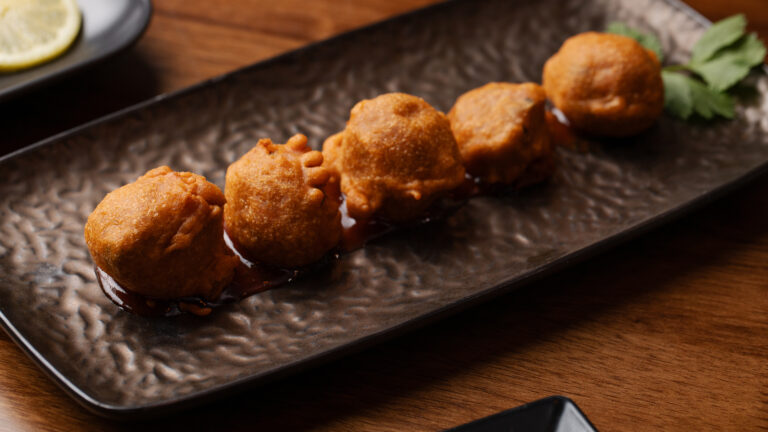
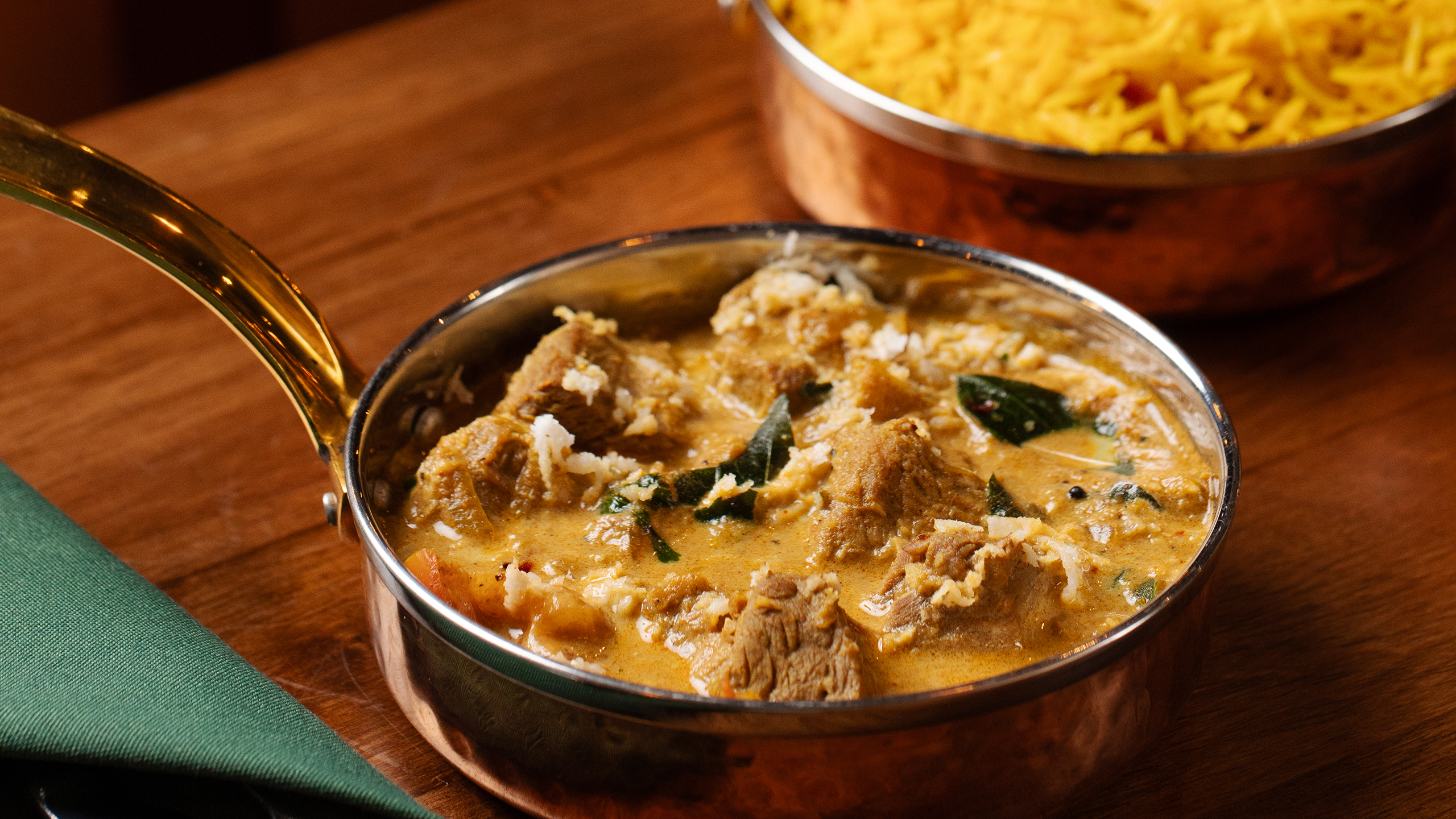
Mappas is one of those dishes that surprises people who come in expecting heat and fire. It is not that kind of curry. It is a Malabar Coast dish built around the first press of coconut milk — thick, ivory-white, gently sweet — with a handful of whole aromatic spices that perfume the gravy rather than dominate it. The lamb sits in this silky sauce, soft and yielding, picking up the fragrance of clove, fennel and black pepper that drift through the background. It is one of the most elegant things to come out of a South Indian kitchen.
And its story is one of the most extraordinary in all of food history.
When Vasco da Gama arrived on the Malabar Coast in May 1498, his first words on being asked what had brought him all the way from Portugal were reported to be: “Christians and spices.” He had spent ten months at sea navigating around the entire continent of Africa, and the spices he was after grew in the very same region that gave us Lamb Mappas.
The coast that changed the world
The Malabar Coast — the long, lush strip of southwest India that is now the state of Kerala — was for most of recorded history the most valuable piece of coastline on earth. It produced black pepper, cardamom, cinnamon, ginger and cloves, spices that the Romans, Arabs, Chinese and eventually Europeans were so desperate to obtain that they reshaped the entire course of global trade to get them.
Black pepper alone was so precious in ancient Rome that Pliny the Elder complained it was draining the empire’s treasury. When the Visigoth king Alaric besieged Rome in 408 AD, among his ransom demands was three thousand pounds of pepper. When Vasco da Gama finally reached Calicut in 1498 after his impossible ten-month voyage, he offered the local Zamorin ruler a gift of fabrics and honey. The courtiers reportedly laughed — nothing less than gold would do in a kingdom that had been trading its spices for centuries.
This is the coastline where Lamb Mappas was born. A place so wealthy from spice trade that European emperors sent their best navigators across uncharted oceans to find it.
Why the coconut milk changes everything
Most people’s idea of an Indian curry involves a rich base of tomatoes, cream or fried spice paste. Kerala cuisine works completely differently. Rather than building heat and weight, it builds fragrance and depth — and its secret weapon is coconut milk, particularly the first extract, or first press, which is the thickest and creamiest.
To make a proper first-extract coconut milk, freshly grated coconut flesh is squeezed directly — no water added — producing a liquid as rich as double cream but with a clean, slightly sweet flavour entirely its own. This is what gives mappas its character. It does not taste of cream, it does not taste of butter, it does not taste of anything you might find in a north Indian restaurant. It tastes of coconut — gently, elegantly — and of the spices it has absorbed during a long, patient simmer.
There is only one rule when cooking with coconut milk that you must never break: do not boil it. A rolling boil will split the emulsion and turn your silk into something grainy and separated. Low heat, patience, and a gentle simmer — that is the whole technique.
The spice mix in mappas is deliberately mild and aromatic: black pepper for warmth, coriander for body, turmeric for colour, with just a hint of clove, fennel and cinnamon powder working in the background. Green chillies add freshness rather than fierce heat. None of it overwhelms. The point is for the coconut milk to remain the main event.
The dish that belongs to Kerala’s oldest community
While mappas is made across Kerala, it holds a special place in the kitchens of the Nasrani community — the Saint Thomas Christians of Kerala, who trace their faith back to the Apostle Thomas himself, said to have arrived on the Malabar Coast in 52 AD. This makes them one of the oldest Christian communities on earth, predating Christianity in most of Europe.
Nasrani cuisine is a remarkable fusion of Indian, Middle Eastern, Jewish and Syrian culinary influences, shaped over two thousand years of cultural exchange. Within their tradition, meat dishes like mappas carry a particular meaning: they are celebratory food. Feast food. In Nasrani households, vegetarian cooking is associated with mourning and fasting, while meat-forward dishes announce occasions of joy. Lamb mappas appears at weddings, at homecomings, at Sunday lunches when the whole family gathers. It is a dish that arrives with good news.
That context — the layered history, the sense of occasion — is something we think about at Madurai. A bowl of mappas is not just a curry. It is a dish with two thousand years of heritage in it.
Mappas in Glasgow
When guests try our Lamb Mappas for the first time, the reaction is almost always the same: surprise. They expected something fiercer. What arrives instead is a pale, gently fragrant bowlful that asks you to slow down, to pay attention. The warmth is subtle — a slow-building heat from black pepper and green chilli that creeps in after the creaminess has settled. It lingers rather than shouts.
Glasgow is a good city for this kind of food. This is a place that has always known how to appreciate things that are quietly excellent — the kind of pub that serves the best pint in Scotland without any fanfare about it, the patter that rewards patience. Mappas fits here.
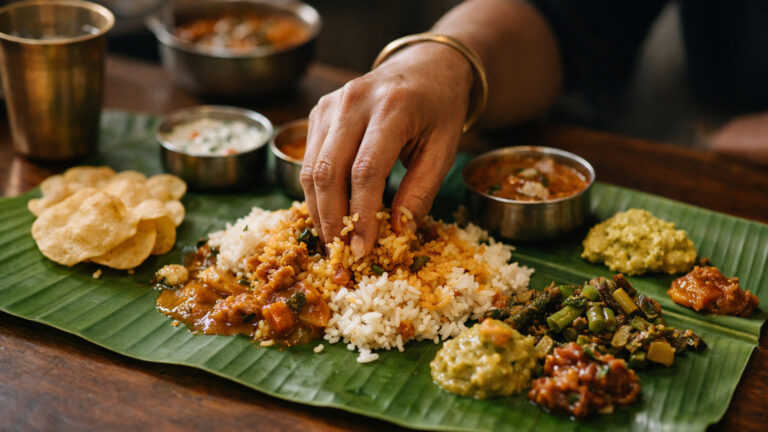
We serve it with uttapam or steamed rice; both naturally gluten free, both excellent at catching that creamy coconut milk gravy.
Make it at home
The recipe below is the home version — achievable on a weeknight with a pressure cooker and a tin of full-fat coconut milk. A few things to know before you start:
Do not use light coconut milk. The creaminess is the dish; anything labelled “reduced fat” will give you a thin, watery result. Second: the tempering at the end — mustard seeds and curry leaves popped in hot oil — is not decorative. It is one of the essential techniques of Kerala cooking, releasing aromatic oils that lift the entire dish. Do it last and pour it straight into the curry while still sizzling. Third: never boil the coconut milk. Add it off the heat or over the lowest possible flame and you will be rewarded with something silky and beautiful.
The Recipe for Lamb Mappas
Ingredients
The spices
For the tempering
Method
Rather Let Us Do It?
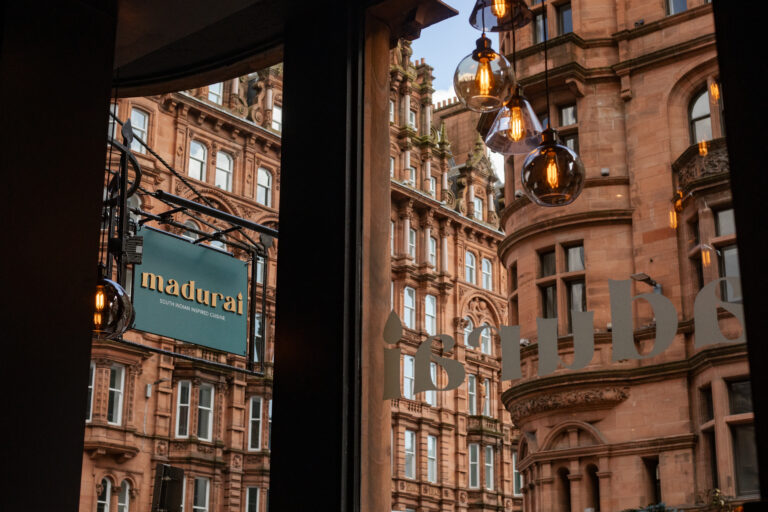
Lamb Mappas is on the menu at Madurai — Glasgow’s South Indian restaurant at 142a St Vincent Street, G2 5LQ, five minutes from Glasgow Central.
Our entire menu is naturally gluten free, and we’re one of only a handful of restaurants in Glasgow to hold full Coeliac UK accreditation. So if you’re coeliac, gluten intolerant, or just someone who likes bold, properly made South Indian food, come in.