
Lamb Ularthu — The Dish That Empires Fought Over
Let’s talk about the small, wrinkled black thing sitting in the grinder on your kitchen counter.
You use it every day. You barely think about it. You’d probably be annoyed if you ran out of it, but you’d replace it for £1.50 at the corner shop and move on with your life.
That same spice — black pepper — was once so valuable that a Roman emperor built dedicated warehouses just to store it. Arab traders spread elaborate fairy tales across Europe to keep its origins secret. And when the Visigoths besieged Rome in 410 AD and demanded a ransom to go away, they asked for 3,000 pounds of pepper alongside gold and silver.
Three thousand pounds of pepper. To spare a city.
The Romans, apparently, paid up. (Spoiler: the Visigoths sacked the city anyway.)
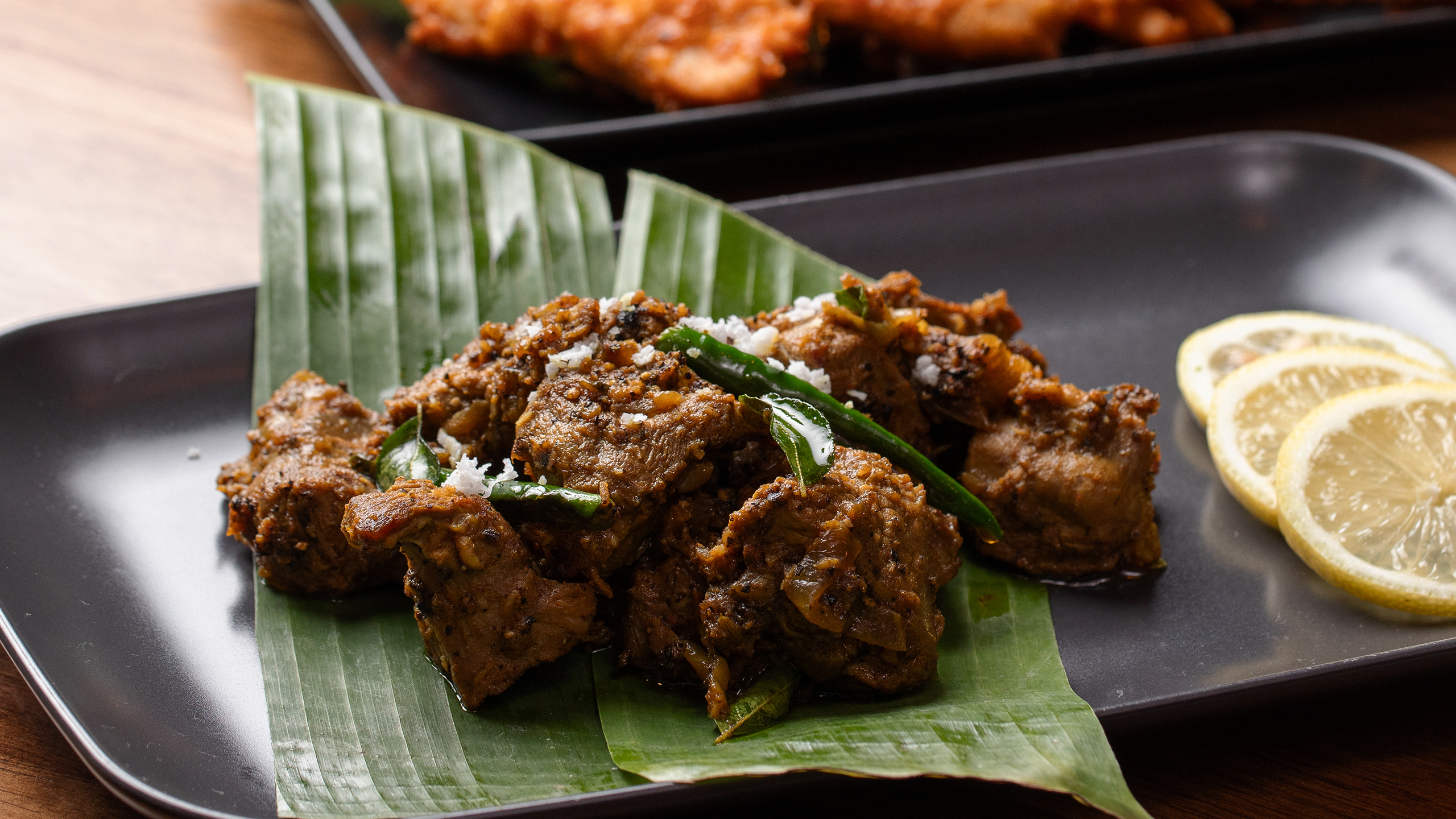
All of this chaotic, slightly unhinged history is connected to a dish on our menu at Madurai: Lamb Ularthu, a dry-fried Kerala pepper fry that’s been making people very happy for a very long time.
First, What Even Is It?
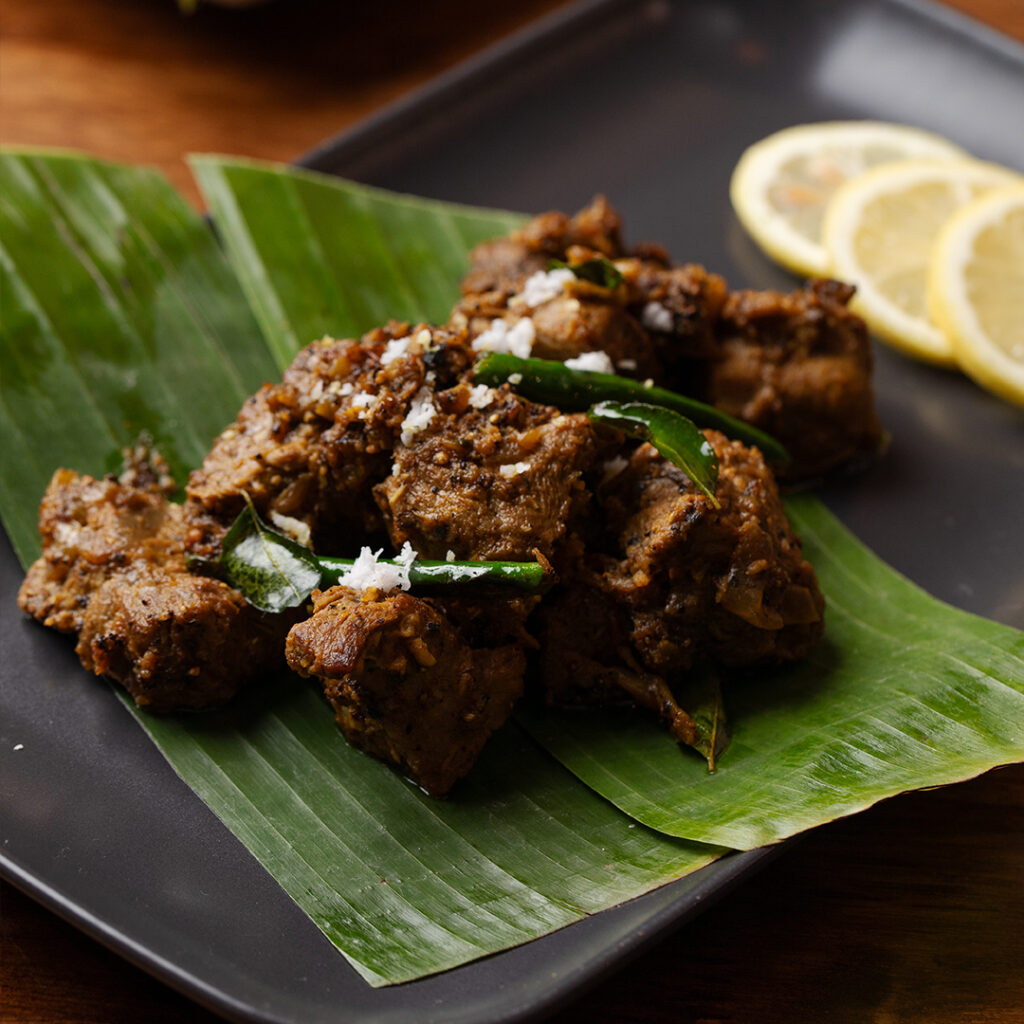
Lamb Ularthu — sometimes written as Ularthiyathu — is a Kerala classic. The word ularthu roughly translates from Malayalam (the language of Kerala) as roasted, but that doesn’t quite cover it.
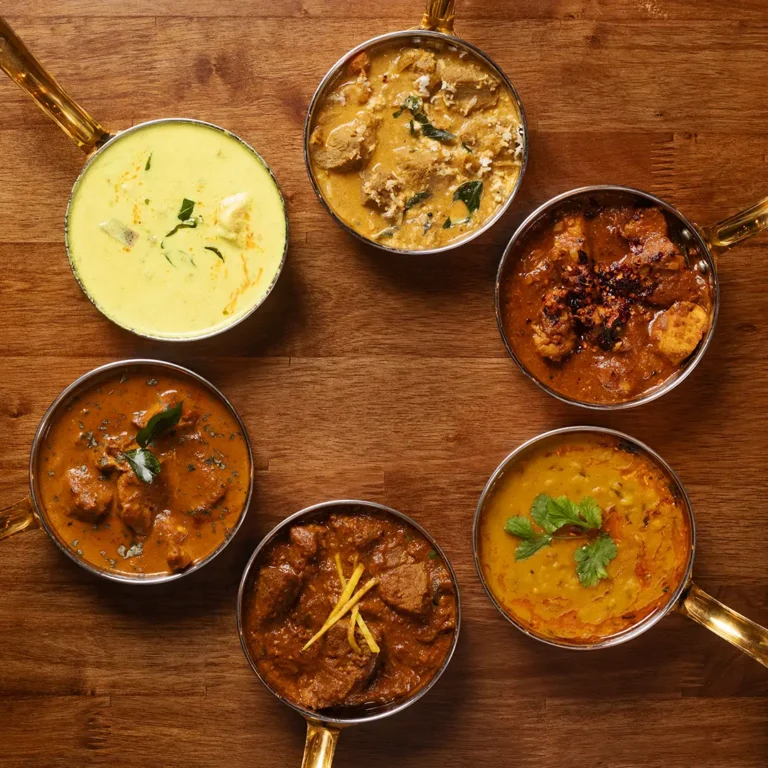
This isn’t a curry. It isn’t a stew. It’s a dry fry — lamb cooked in water until tender, then thrown into a spiced base of onions, tomatoes, ginger, garlic, and a handful of whole spices, and cooked down until every last drop of liquid has completely vanished. Then you keep going. You fry until the oil separates. You fry until the masala clings to every surface of every piece of meat. You fry until the edges catch slightly and the whole thing smells absolutely incredible.
The result is bold, a little smoky, intensely spiced — and finished at the very end with a generous scatter of crushed black pepper. Not cooked in. On top. Right before serving. (More on why that matters in a moment.)
It’s gluten free, naturally — no flour, no thickeners, nothing hidden. Which is one of the reasons it fits so well on our menu at Madurai, where everything we serve is fully gluten free and Coeliac UK accredited.
The Pepper That Broke the Ancient World
Here’s where it gets genuinely wild.
Black pepper — Piper nigrum — originated on the Malabar Coast of Kerala, the same southwestern Indian coastline where Lamb Ularthu was born. The spice had been grown, traded, and cooked with in South India for thousands of years before the rest of the world caught on.
When the rest of the world did catch on, things got chaotic very quickly.
Fragments of black pepper were found stuffed inside the mummy of Ramses II, who died in 1213 BC — proof that the Egyptians were importing it from Kerala over three thousand years ago. The Romans got obsessed with it shortly after, using it in everything. The most famous Roman cookbook of the time featured pepper in over 80% of its recipes.
Pliny the Elder — a Roman writer who was essentially the world’s first grumpy food critic — was baffled by the obsession. He wrote: “It is quite surprising that the use of pepper has come so much into fashion… pepper has nothing in it that can plead as a recommendation to either fruit or berry, its only desirable quality being a certain pungency.”
He then complained that India was draining the Roman Empire of 50 million sesterces a year because of it. Romans, he felt, needed to calm down about pepper.
They did not calm down. Fraudsters started cutting black pepper with juniper berries and lead powder to increase their profits — which tells you everything you need to know about how much money was involved.
Meanwhile, Arab traders who controlled the spice routes kept Kerala’s identity as the source of pepper completely secret, spreading myths that pepper grew in forests guarded by venomous snakes, and that the only way to harvest it was to burn the jungle down — which was why the berries turned black.
Medieval Europeans believed this. For generations.
The real story, of course, is far less dramatic: it grows on a vine in the Kerala rainforest, it doesn’t need snakes, and you don’t need to set anything on fire to get it. But the myth kept competitors away and prices sky-high — which was the entire point.
Vasco da Gama and the King’s Perfect Comeback
By the late 15th century, the Portuguese had had enough of paying Arab middlemen for pepper and decided to find the source themselves.
In 1497, King Manuel of Portugal sent Vasco da Gama to find the sea route to India with the purpose of finding “Christians and spices.” The journey nearly killed them all — more than half his crew died — but da Gama eventually reached Kerala.
The story goes that when da Gama asked the local king if he could take a pepper vine back to Portugal for replanting, the king smiled and said something along the lines of: “You may take our pepper. But you cannot take our rains.”
He was absolutely right. The plants died. The Kerala monsoon, it turned out, was not something you could recreate in Lisbon. Kerala kept its monopoly for a while longer, and the king got the best line in the entire Age of Exploration.
Why the Pepper Goes in Last (This is Important)
Now back to the dish itself, and the one thing that separates a good Lamb Ularthu from a great one.
Every other spice in this recipe — the chilli, the coriander, the garam masala, the turmeric — goes in during cooking. Heat transforms them, mellows them, binds them into the base. Standard stuff.
The crushed black pepper goes on at the very end. After the heat is off or right before serving. Never cooked in.
This isn’t accidental. When you cook black pepper, heat destroys the volatile aromatic compounds — piperine and the essential oils — that give it its warmth and complexity. Added late, those compounds stay alive and sharp. You get pepper as a flavour, not just as background heat. It cuts through the richness of the slow-cooked lamb and wakes the whole dish up.
It’s the same reason a good steak gets cracked pepper right before it hits the plate. Timing is everything.
Two Thousand Years of People Eating This
Lamb Ularthu isn’t a new dish. The slow dry-fry technique — whole spices crackling in oil, onions cooked low and slow to a deep golden brown, meat reduced completely dry in a spiced base — is documented in ancient Kerala cooking traditions going back thousands of years.
The dish became particularly beloved in Kerala’s Syrian Christian community — one of the oldest Christian communities on earth, tracing their roots to 52 AD — who made it a centrepiece of their festive cooking. Weddings, Christmas, Easter, every occasion worth celebrating: Ularthu on the table. It spread across communities and became a fixture of Kerala cooking more broadly.
Today you’ll find versions of it in the kallushap toddy shops that line Kerala’s backroads, in family homes across the diaspora, and — if you happen to be in Glasgow city centre — at Madurai on St Vincent Street.
Should You Try It?
Honestly? Yes. Not because it’s a novelty, and not to be performative about it. But because food genuinely tastes different when you engage with it fully.
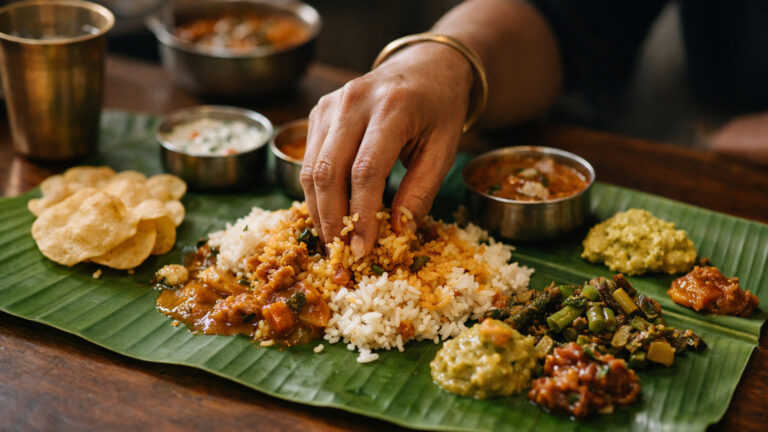
Next time you visit Madurai, try it with your rice dish or your dosa. Use your right hand. Use your fingertips, not your palm. Mix the rice and curry together first — don’t be shy, this is actively encouraged — and form a small amount before lifting it to your mouth.
You might feel slightly self-conscious for about thirty seconds. And then you’ll realise you’re tasting the food properly for the first time.
Some habits are thousands of years old for a reason.
The Recipe for Lamb Ularthu
Ingredients
Method
FAQs
Rather Let Us Do It?
Lamb Ularthu is on the menu at Madurai — Glasgow’s South Indian restaurant at 142a St Vincent Street, G2 5LQ, five minutes from Glasgow Central.
Our entire menu is naturally gluten free, and we’re one of only a handful of restaurants in Glasgow to hold full Coeliac UK accreditation. So if you’re coeliac, gluten intolerant, or just someone who likes bold, properly made South Indian food, come in.