
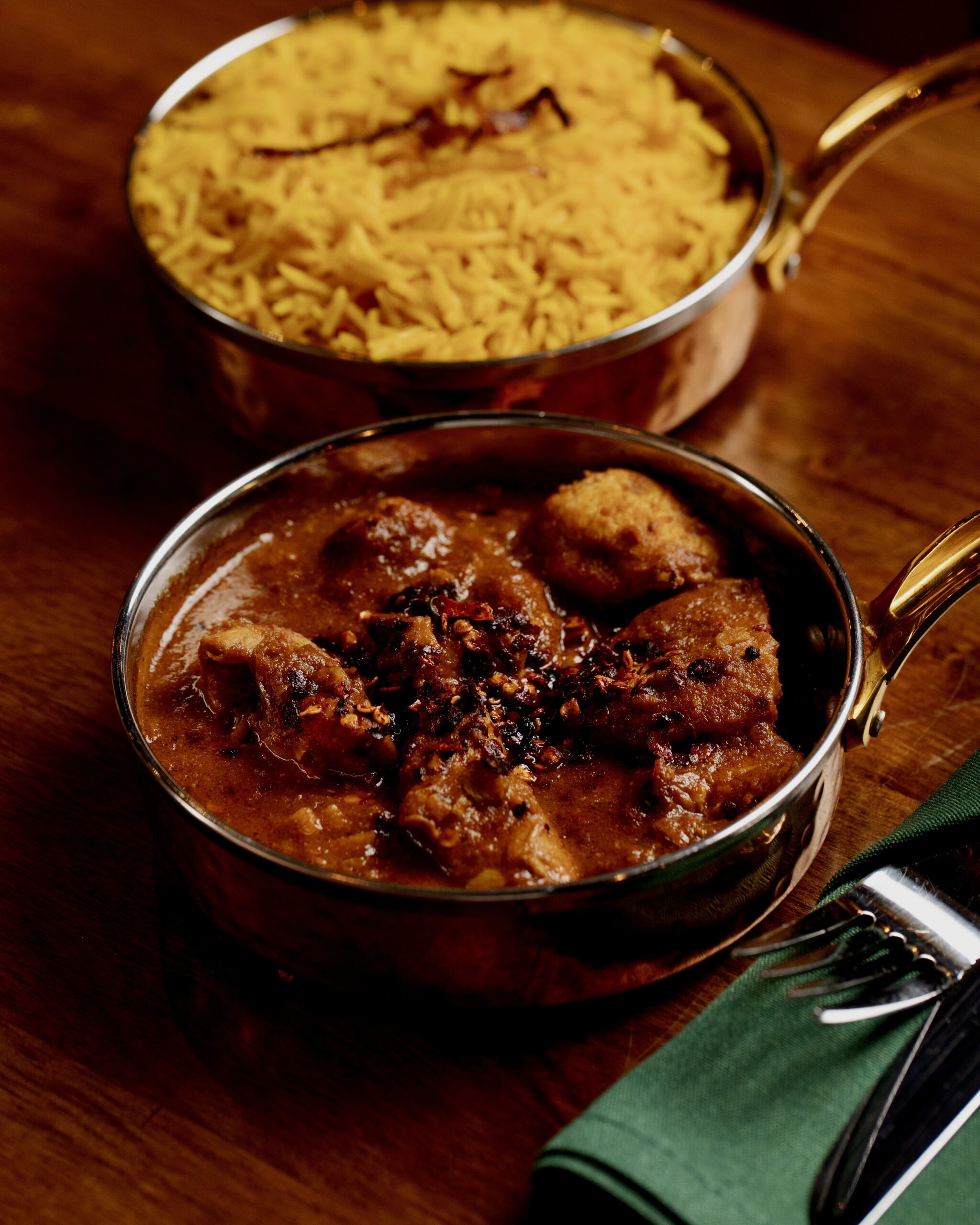
Chicken Ghassi Recipe: A Gluten-Free South Indian Coconut Curry
Ask most people to picture an Indian curry and they’ll describe something built on tomatoes, onions and a long simmer. Chicken Ghassi works differently.
Its flavour comes from a paste of whole spices, dry-roasted until they darken, then ground down with coconut. Nothing is added raw. Everything is toasted first, and that single step changes the entire character of the dish.
At Madurai, Chicken Ghassi is one of the curries guests ask about most, usually after they’ve noticed how different it tastes from the curries they know. Here’s the story behind it, the full recipe, and the reasoning behind each stage, so you can see exactly why it works and make it yourself.
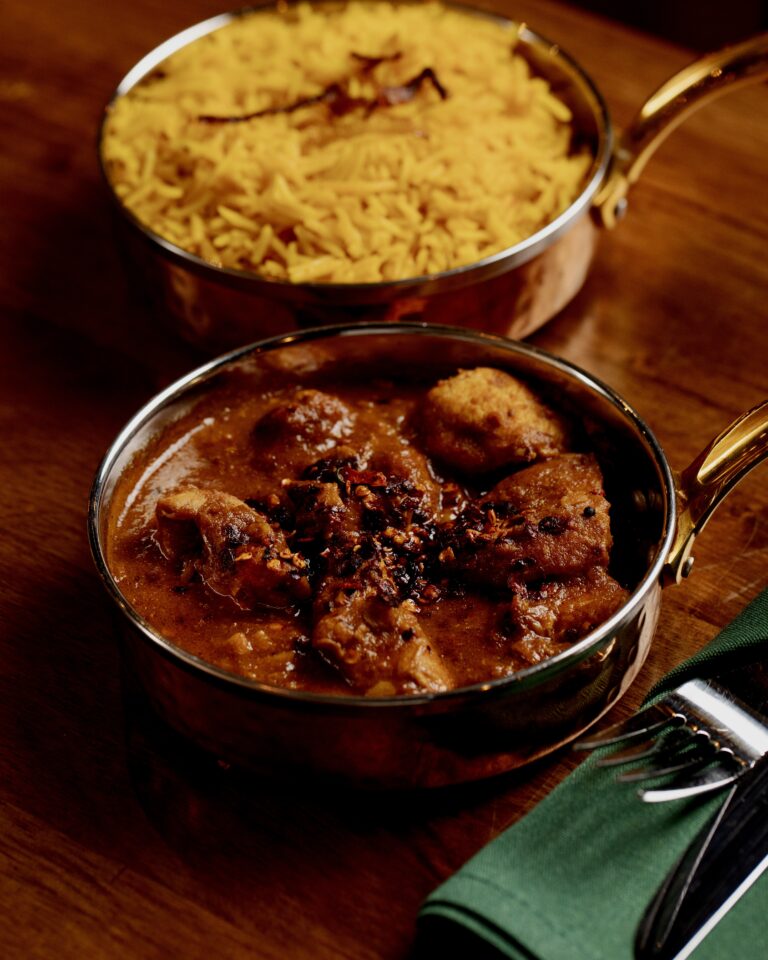
Where Chicken Ghassi Comes From
The name gives away more than it seems to. In Tulu, a language spoken along a narrow strip of India’s southwestern coast, “kori” means chicken and “gassi” means curry, and the dish grew out of the kitchens of that coastline rather than any single well-known Indian region. It’s a fishing and farming coast, backed by coconut groves and facing the Arabian Sea, and for centuries that sea carried more than fishing boats. Arab and, later, Portuguese traders worked these ports for pepper and other spices, and the cooking absorbed new ingredients from every wave of contact without ever losing its coconut-and-spice foundation underneath.
Chilli is the clearest evidence of that exchange. It’s a plant from the Americas that only reached India in the early sixteenth century, carried along Portuguese trade routes after Christopher Columbus brought it back to Europe. Before that, cooks along this coast relied on black pepper and long pepper for heat. Chilli arrived, took hold within a few generations, and is now so central to the region’s cooking that it’s easy to forget it’s a relatively recent addition to a much older cuisine.
What makes a curry “gassi” rather than any other kind of curry is the method as much as the place. Whole spices are dry-roasted, ground with coconut into a paste, and the whole dish is built up around that paste rather than around a fried onion-and-tomato base. It’s a technique passed down through households on that coast for generations, with each family keeping its own slightly different balance of spices, and it’s this version, with chicken, that has travelled furthest and become the best known outside the region.
What Makes Chicken Ghassi Different
Most curry recipes build flavour as they go: fry the onions, add the spices, add the tomatoes, reduce. Chicken Ghassi front-loads that work instead. The coriander seeds, cumin, cloves, cinnamon, garlic, dried red chillies, one of the onions and the tomato are all dry-roasted together first, then ground with roasted coconut into a single paste. That paste, not the chicken or the coconut milk, is what carries the dish.
Dry-roasting spices before grinding does something specific: heat draws the essential oils out of whole spices and changes their aroma from raw and sharp to deep and rounded. It’s the difference between a curry that tastes like a shelf of jars and one that tastes like it has been cooked, slowly, on purpose.
Curry leaves do a similar job at the other end of the dish, added at the very end so their fragrance stays bright rather than cooking away. The leaves come from the curry tree, native to South Asia, and have been part of South Indian cooking for a very long time. Tamil texts from as early as the first centuries CE already describe their use in the kitchen, which makes curry leaves one of the older continuously used ingredients in the region’s food.
Coconut carries the other half of the dish. Coconut palms most likely originated somewhere in the Indo-Malay region and spread along tropical coastlines from there, eventually becoming one of the most economically important palm species in the world. In this recipe, coconut appears twice: grated and roasted into the spice paste, then again as coconut milk stirred through the curry, first to build the base and then, at the end, to soften and finish the sauce.
Why Chicken Ghassi Is Naturally Gluten Free
None of the ingredients in Chicken Ghassi start out containing gluten. Coriander, cumin, cloves, cinnamon, turmeric, garlic, chillies, coconut and rice are all naturally gluten free, along with the chicken, onion and tomato that make up the rest of the dish. This is typical of South Indian cooking generally, which leans on rice, lentils and coconut rather than the wheat-based flours and thickeners more common in northern Indian and British cooking.
Naturally gluten free is not the same as guaranteed safe, though. Coeliac UK notes that rice, meat, fish and vegetables are all safe to eat, but for someone with coeliac disease the real risk usually sits in what gets added later: a stock cube, a thickener, or cross-contact during cooking, rather than the core ingredients themselves. Reading labels carefully matters even for foods that look obviously safe, and it’s the same principle behind Madurai’s full Coeliac UK accreditation. Every dish on our menu, Chicken Ghassi included, is prepared under that same standard.
The recipe below is the home version — achievable on a weeknight with a pressure cooker and a tin of full-fat coconut milk. A few things to know before you start:
Do not use light coconut milk. The creaminess is the dish; anything labelled “reduced fat” will give you a thin, watery result. Second: the tempering at the end — mustard seeds and curry leaves popped in hot oil — is not decorative. It is one of the essential techniques of South Indian cooking, releasing aromatic oils that lift the entire dish. Do it last and pour it straight into the curry while still sizzling. Third: never boil the coconut milk. Add it off the heat or over the lowest possible flame and you will be rewarded with something silky and beautiful.
The Recipe for Chicken Ghassi
Ingredients
Method
The order matters here. Cooking the chicken partway before the paste goes in lets the meat take on some flavour from the onion and its own juices first, rather than being coated in spice from the very start. The two additions of coconut milk do different jobs too: the first builds the sauce, the second loosens and finishes it, so the curry stays glossy rather than reducing down too far.
Try It at Madurai
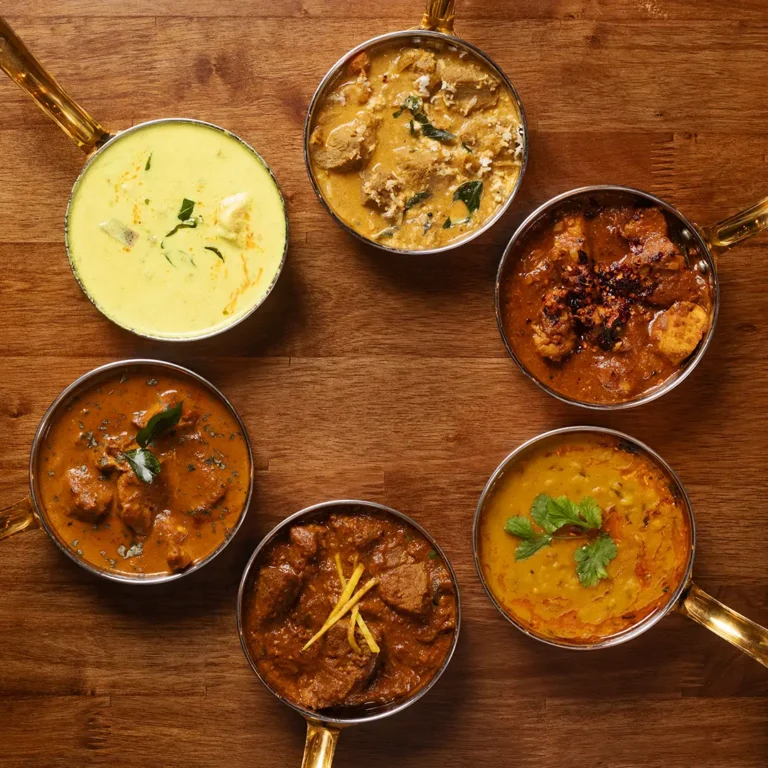
Chicken Ghassi sits alongside curries like Black Pepper Chicken and Poondu Chicken on our menu, each built on a different spice base rather than variations on the same gravy.
If you’d rather have someone else do the roasting and grinding, you can find it in the curries section of our menu, or book a table at St Vincent Street to try it alongside the rest of the South Indian-inspired menu.
If you enjoyed the history behind this one, our piece on Lamb Ularthu covers a similarly spice-forward South Indian dish, this time dry-fried rather than in a sauce.
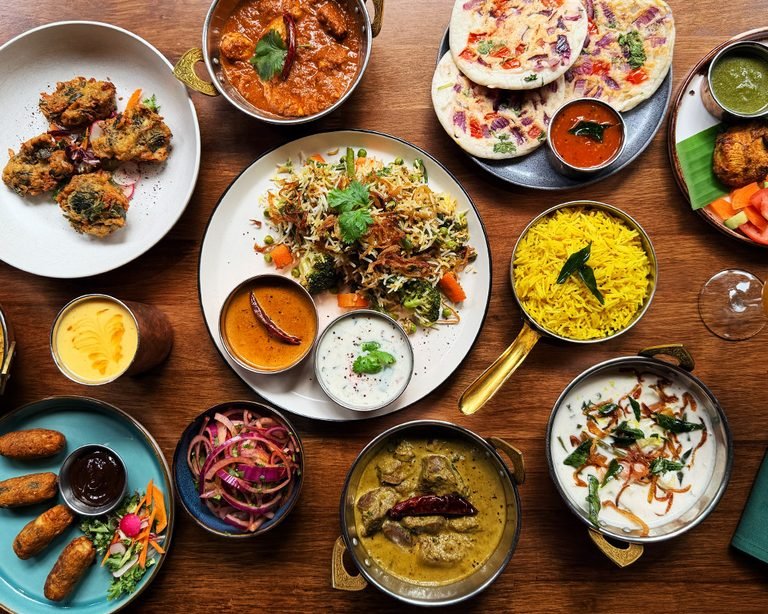
Our entire menu is naturally gluten free, and we’re one of only a handful of restaurants in Glasgow to hold full Coeliac UK accreditation. So if you’re coeliac, gluten intolerant, or just someone who likes bold, properly made South Indian food, come in.