
Curry Leaves: The Secret Behind South Indian Cuisine
Most people have heard of curry powder. Far fewer have heard of the ingredient that actually gave curry its name, and even fewer realise the two have almost nothing to do with each other.
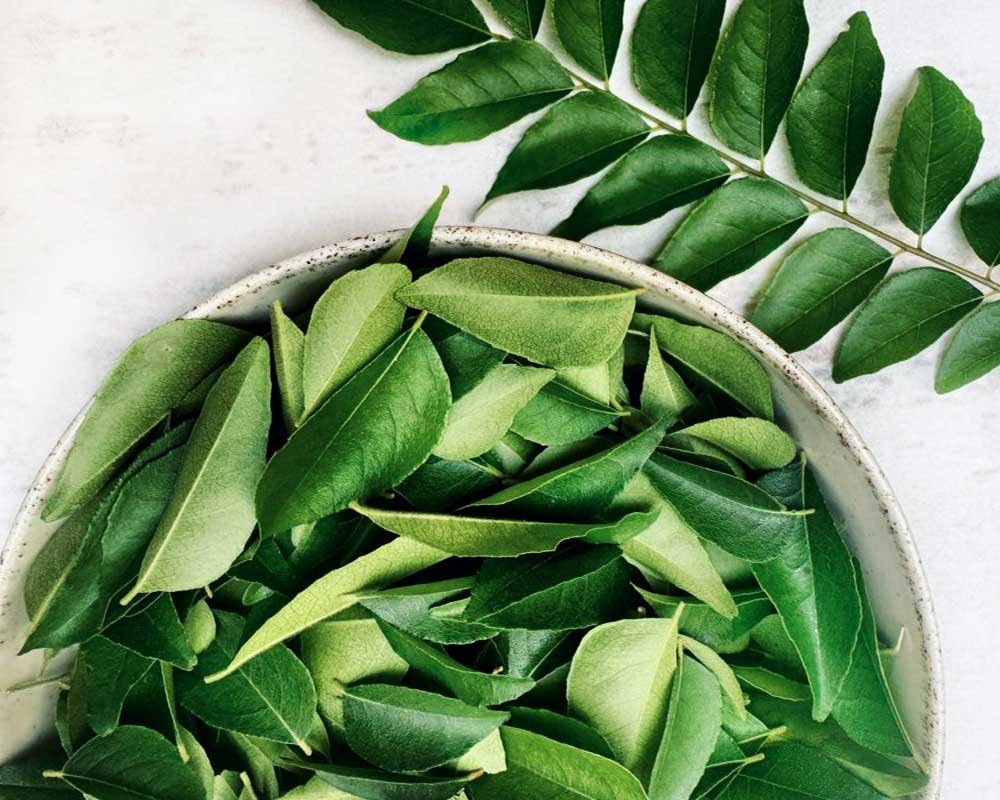
The curry leaf is a small, glossy leaf that grows on a tree native to the Indian subcontinent, and it sits at the centre of South Indian flavours in a way no spice blend from a supermarket shelf ever could.
This is the story of that leaf: where it comes from, why it cannot be replaced by anything dried or bottled, why it is almost never eaten directly despite being essential to the dish, and why a technique as old as South Indian cooking itself still shapes the way food is made today.
What Exactly Is a Curry Leaf?
The curry leaf comes from a small tree, sometimes described as a shrub, that grows between one and a half and four and a half metres tall across South Asia. Perhaps its strangest secret is its family tree. As Encyclopaedia Britannica explains, the plant is native to India and Sri Lanka and is now found throughout South Asia and Southeast Asia. It belongs to the citrus family, Rutaceae, making it a distant relative of lemons, oranges and limes, something almost nobody would guess from taste alone. The tree was formally classified in 1767 by Carl Linnaeus, the Swedish botanist whose naming system is still the basis of how every living thing is catalogued today, as recorded in botanical taxonomy.
The name is where the confusion begins. Many assume curry leaves are an ingredient in curry powder, or that the leaf itself is somehow a byproduct of the spice blend. In fact, the relationship runs the other way. Curry powder is a British invention. According to a feature from Indiana University Bloomington, during colonial rule in India the British developed yellow curry powder, a blend of several Indian spices that sometimes included curry leaf. The leaf existed in South Indian kitchens for centuries before anyone thought to grind spices into a jar and call it curry.
The tree also produces small black berries with sweet, edible pulp, though the seed inside each one is poisonous and is never eaten, a detail confirmed by both the Missouri Botanical Garden and the Indiana University record above. It is a plant that rewards curiosity and punishes carelessness in equal measure.
Why Fresh Matters More Than Almost Any Other Ingredient
Walk into most UK supermarkets and the only curry leaves available are dried. This is a problem, because curry leaves lose most of what makes them valuable the moment they dry out. The same Indiana University Bloomington source is direct about this: dried curry leaves are used in cooking, but they carry far less flavour than fresh ones.
The reason comes down to chemistry. Curry leaves hold their flavour in volatile aromatic oils within the leaf structure. Drying breaks that structure down, and much of the aroma evaporates along with the moisture. What is left looks the part but delivers little of the citrus, pepper and faintly smoky character that fresh leaves bring to a dish.
The Missouri Botanical Garden’s plant reference describes the tree as typically six to fifteen feet tall, noted above all for leaves that are pungent and aromatic. That pungency is exactly what gets lost in drying, and exactly why it matters so much to South Indian flavours specifically, where the leaf is not a background note but a defining one.
The Technique That Unlocks the Flavour
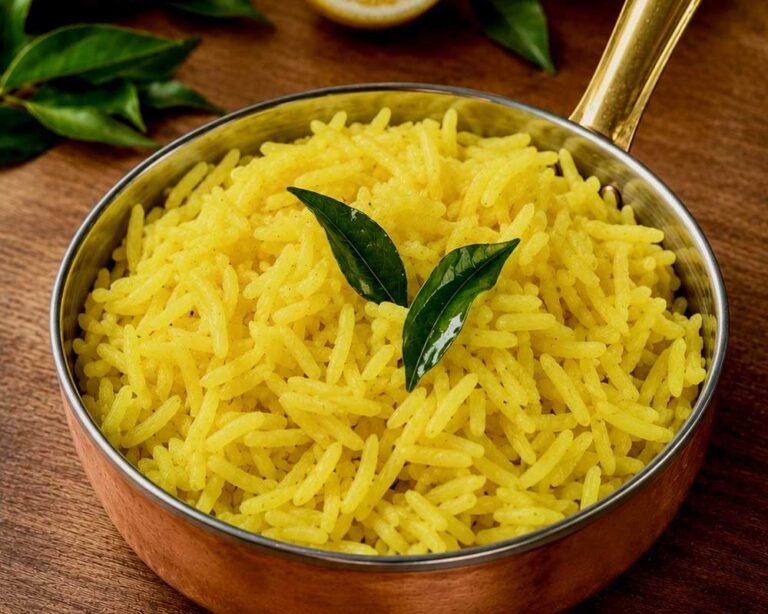
Curry leaves are rarely eaten raw or simply sprinkled into a dish. They are almost always cooked through a technique called tempering, in which whole spices and aromatics are briefly heated in hot oil or ghee to release their flavour before being added to the rest of the dish.
America’s Test Kitchen breaks this down clearly, describing how the technique blooms whole spices in fat to draw out their aromas and fat-soluble flavours. The infused oil, along with whatever has been fried in it, is then either poured over a finished dish or used as the starting point for cooking.
For curry leaves specifically, this matters because many of their aromatic compounds dissolve in fat rather than water. Simmering a leaf in a watery broth releases little of its character. Frying it briefly in hot oil, often alongside mustard seeds, releases the aroma almost instantly, which is why a well-run South Indian kitchen can often be identified by smell before it is identified by sight.
Why You Rarely Eat the Leaf Itself
Here is the detail that surprises most newcomers to South Indian food: despite being one of the most essential ingredients in the entire cuisine, curry leaves are very rarely eaten directly. Their job is to release flavour into the dish while it cooks, not to be swallowed on the plate.
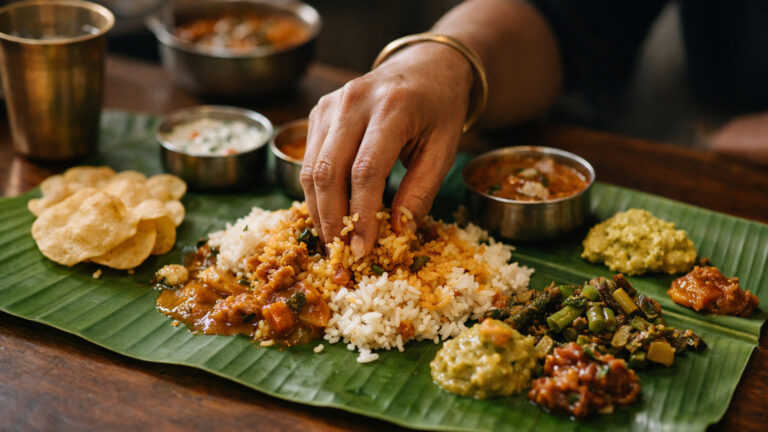
This is a familiar idea in Western cooking too, just applied to a different leaf. Wikipedia’s overview of Indian dining customs notes that whole spices such as bay leaves are not eaten as part of accepted dining practice, simply separated and set aside by the diner. Curry leaves are treated the same way. Diners commonly pick each crisp leaf out of a curry or a rice dish and leave it at the edge of the plate, a habit one food writer for Gulf News described watching her own family do methodically, one leaf at a time, calling it “a kind of ritual” whenever curry leaves appeared in a dish, in a personal account of growing up with the ingredient.
It is a strange contradiction once you notice it. The leaf that gives a dish its identity is the one ingredient nobody is meant to actually chew.
An Ingredient That Was Never a Substitute
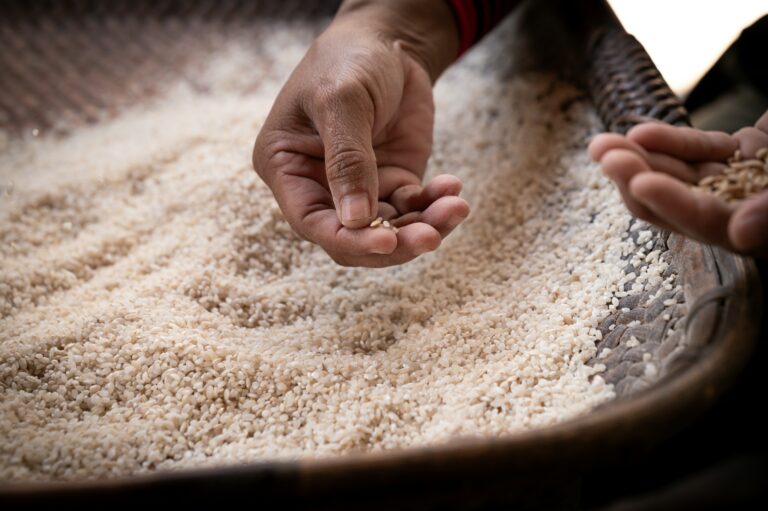
One of the more persistent misunderstandings about South Indian cooking in the West is the idea that it relies on substitutions: rice instead of bread, lentil flour instead of wheat, and so on. Curry leaves complicate that assumption entirely. They were never a replacement for anything. Long before gluten-free eating became a mainstream conversation in the UK, curry leaves, rice and lentils were simply the foundation South Indian cooking was built on.
This is worth pausing on, because it reframes how naturally gluten-free eating should be understood. Coeliac UK’s guide to the gluten-free diet points to rice and lentils as staple naturally gluten-free foods to build meals around. South Indian cooking has quietly ticked these boxes for centuries, not as an adaptation, but as its original form, a point explored further on Madurai’s Spice Journal piece on why South Indian food is naturally gluten free.
Curry Leaves at Madurai
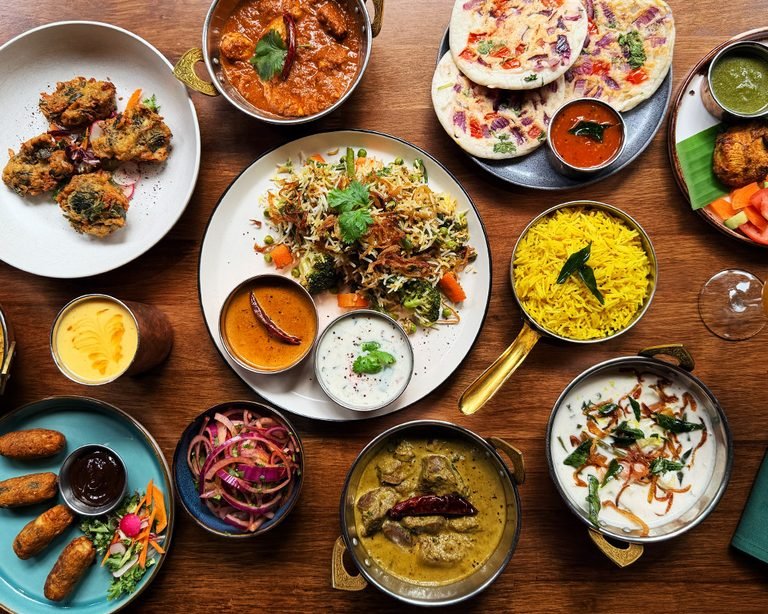
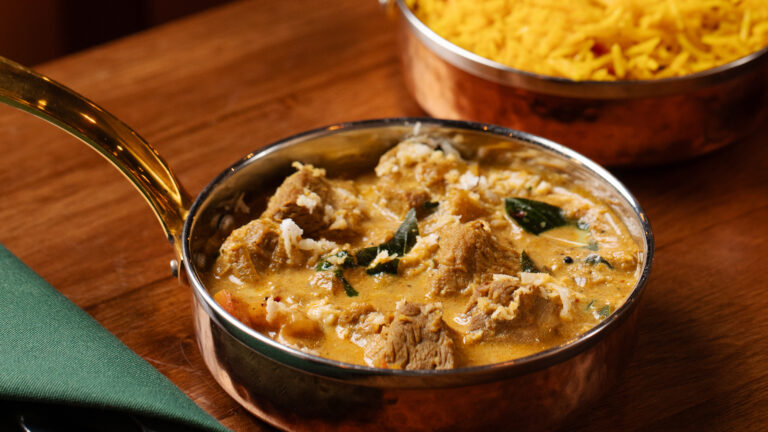
This is exactly the thinking behind the kitchen at Madurai. Set on St Vincent Street in Glasgow city centre, Madurai’s full menu is built around the same foundations described above: rice, lentils, coconut and curry leaves, tempered using techniques that go back generations rather than substituted or added as an afterthought. The kitchen is fully gluten-free and Coeliac UK accredited, which means the naturally gluten-free character of South Indian cooking is not a workaround here. It is simply how the food has always been made.
For anyone keen to taste the difference between a dried, bottled version of Indian flavour and the real foundations of South Indian cooking, the best way is simply to try it. Fresh curry leaves, properly tempered, actually bring to a plate, even if you leave every leaf at the edge when you’re done.
Taste Curry Leaves in South Indian food in Glasgow
Book your table at Madurai or call 0141 221 7722
Madurai, 142A St Vincent Street, Glasgow, G2 5LQ